How to read your padel match analysis (without getting overwhelmed)
You've uploaded your match and opened the analysis—now what? This guide breaks it down into a simple way to read your data so you can focus on what actually matters.
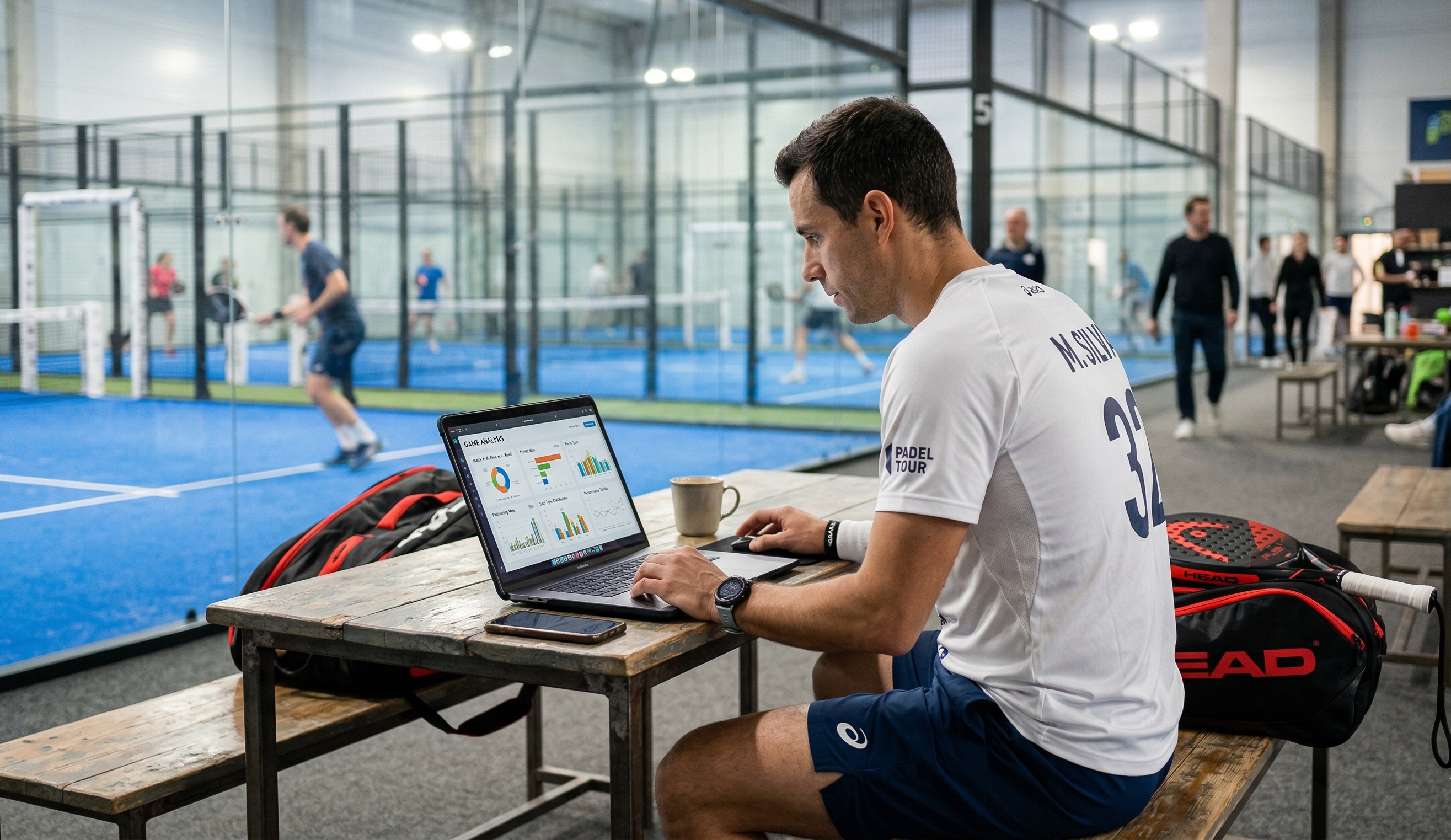
How to read your padel match analysis (without getting overwhelmed)
Key takeaways:
- Read your analysis in order—don't try to absorb everything at once.
- Start with AI Insights for the summary, then court positioning, then net possession.
- Net possession and team coordination matter more than individual shot stats.
- Pick just 1–2 focus areas per match instead of trying to fix everything.
You've uploaded your match to Bandeja AI, opened the analysis… and suddenly you're looking at heatmaps, percentages, charts, and metrics.
It's powerful—but it can also feel like a lot.
This guide breaks it down into a simple way to read your analysis so you can focus on what actually matters and start improving right away.
Start with One Question: How Did I Play Overall?
Before diving into numbers, go straight to the AI Insights section.
This is your high-level summary:
- What you did well
- Where you struggled
- What to focus on next
Think of it as your coach's quick debrief after a match.
Everything else in the dashboard supports this summary. Don't try to read everything at once—start here, then validate it with the data.
Step 1: Check Your Court Positioning First
If there's one place to start, it's where you spent your time on court.
Look at:
- Heatmap → Where you were most of the match
- Court Zone Breakdown → % in defence, transition, and net
Why this matters:
- Strong players spend more time at the net
- Weak positioning often shows up as too much time in defence or transition ("no man's land")
Simple rule:
- Too much defence → you're too passive
- Too much transition → poor decision-making
- More net time → more control of the match
Don't overthink it—just ask: Am I where I should be most of the time?
Step 2: Look at Net Possession (Who Controlled the Game)
Next, check Net Possession.
This tells you how often your team controlled the net during rallies.
Why it matters:
- In padel, the team at the net usually wins the point
- This is one of the strongest indicators of performance
Interpretation:
- Low net possession → you're reacting, not controlling
- High net possession → you're dictating play
If your number is low, the fix is usually not technical—it's tactical positioning and movement.
Step 3: Check Team Coordination (Are You Playing Together?)
Padel is a team sport. Even if you play well individually, poor coordination will cost you points.
Look at:
- Vertical coordination → Are you and your partner at the same depth (both forward or both back)?
- Horizontal coordination → Are you covering the court side-to-side properly?
What good looks like:
- Moving forward and back together
- No big gaps between players
What bad looks like:
- One player at the net, one stuck in defence
- Large spaces opponents can exploit
If this score is low, your biggest gains will come from team movement, not shot technique.
Step 4: Use Shot Stats as Context (Not the Main Story)
Now you can look at Shot Statistics:
- Forehands
- Backhands
- Overheads
- Serves
These are useful—but they're not the first thing to focus on.
Use them to answer questions like:
- Am I avoiding my backhand?
- Am I using overheads enough when at the net?
But remember: most amateur mistakes in padel are positional, not technical. Don't get stuck optimising shots before fixing positioning.
Step 5: Sanity Check with Activity Metrics
Finally, glance at:
- Distance covered
- Active vs passive time
These tell you how engaged you were in the match.
Signals to watch:
- Low movement → late reactions or poor anticipation
- Low active time → not involved enough in rallies
This is secondary—but useful for spotting effort and intensity issues.
The Simple Way to Read Any Match
If you remember nothing else, use this order:
- AI Insights → What happened
- Court Positioning → Where you played
- Net Possession → Who controlled the match
- Team Coordination → How well you moved together
- Everything else → Supporting details
That's it.
Don't Try to Fix Everything at Once
The biggest mistake players make is trying to improve everything after one match.
Instead:
- Pick 1–2 focus areas
- Apply them in your next game
- Upload again and track progress
That's how you actually improve.